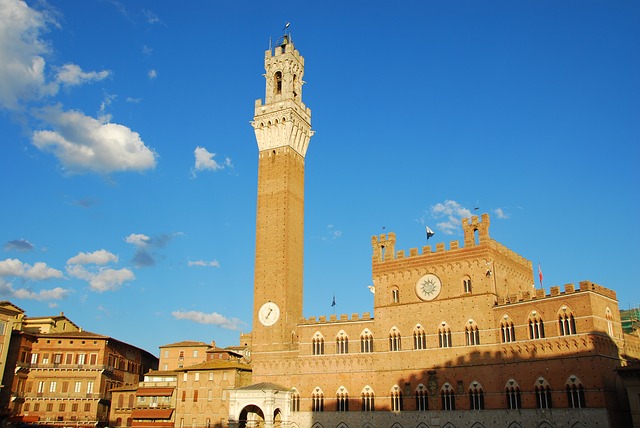
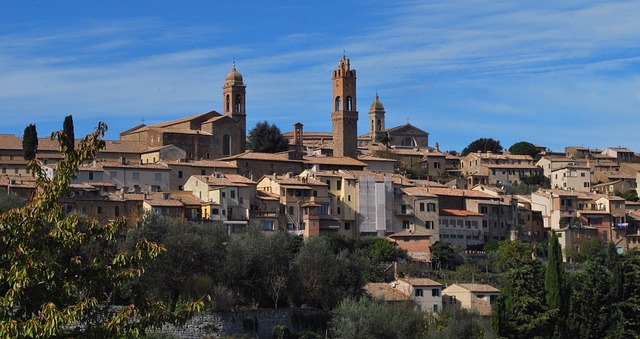
Siena, one of the Unesco World Heritages in Italy, is the embodiment of a medieval city that has preserved to this day its Gothic appearance. The whole city was built around its central square, known as Il Campo, where the Palio is run (if you have watched the James Bond movie, Quantum of Solace, you should remember it). This Tuscan city is rich of history and artistic masterpieces. To begin with, according to the tradition, Siena was founded by Senius, son of Remus, one of the two legendary founders of Rome. From its origin, furthermore, Siena has been home to many international artists, like Mangia and Lorenzetti, who contributed to make the city more and more charming. Let’s start our trip!
Attractions
Piazza del CampoOur holiday starts exactly from the shell-shaped Piazza del Campo, whose architectural integrity is renowned worldwide. Before the thirteenth century this square was home to one of the biggest town’s marketplaces, and it remains the focal point of public life in Siena. Il Campo is surrounded by the Palazzo Pubblico (or Palazzo Comunale) and its magnificent Torre del Mangia, as well as by many elegant palazzi signorili. If you love art, the Palazzo Pubblico is worth a visit: it hosts the spectacular cycle of frescoes called “Good and Bad Government” by Ambrogio Lorenzetti. The particularity of these frescoes is that the subject matter is not religious, but civic: in the fourteenth century, the Republic of Siena was one of the most powerful Italian city-states, filled with bankers and merchants. Given the turbulent time for politics (that century was characterized by continuous ferocious party struggles), the series was commissioned by the city council to create a powerful reminder of the effects of political decisions. The ticket for the Palazzo Pubblico costs 8€ if booked online ( here you can find the website to book it); while children under 11 years old do not have to pay. Finally, at the northwest edge of the square you will find the Fonte Gaia, the largest fountain of Siena. Originally decorated with sculptures by Jacopo della Quercia, the fountain was then replaced in 1866 by a copy made in Carrara marble (a variety of marble much stronger than the marble of the Montagnola used by della Quercia). The new fountain also omits the original two nude statues of Rhea Silvia and Acca Larentia, which were found too pagan by the nineteenth-century Siena’s city fathers.
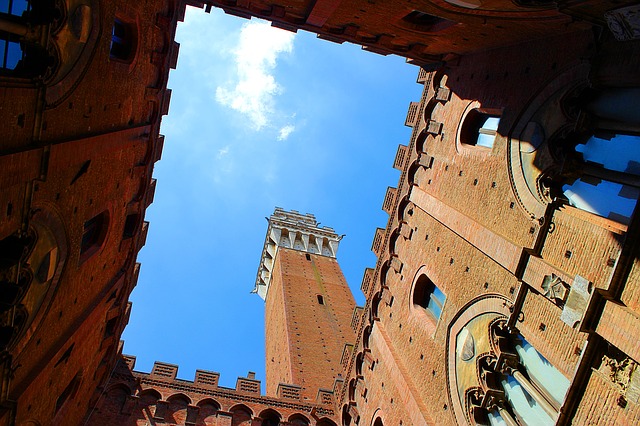
Built in 1338-1348, the Tower located in the Piazza del Campo was one of the tallest secular towers in medieval Italy. More precisely, its 102 metres made it the second tallest tower after Cremona’s Torrazzo (112 metres). The tower, divided into several visually distinct levels, has been replicated many times in several countries (you can find similar towers in Boston, Birmingham, Madrid and Waterbury, Connecticut). Without doubt, Torre del Mangia offers one of the most stunning views of Siena, but the climb can be a bit challenging: to reach the top you will have to climb over 400 steps. For this reason, we suggest that you wear comfortable shoes and clothes! The adult ticket costs 10€, while kids under 11 years old can climb up for free. Family tickets for two adults and two children between 11 and 18 years old are available and cost 25€. If you want to visit both the Torre and the Civic Museum, you can buy a cumulative ticket costing 20€. Remember: this kind of ticket can only be purchased at the ticket office for the Torre since it isn’t available at the museum’s ticket office.
Piazza del DuomoThe Duomo of Siena, known also as the Cathedral of Santa Maria Assunta, is famous not only as an amazing example of Romanesque-Gothic church, but also as the house to many pieces of art signed by authors such as Michelangelo, Nicola Pisano, Donatello, Pinturicchio. Among the others, the Feast of Herod by Donatello and the pulpit made of Carrara Marble deserve to be mentioned. Sculpted by many authors, among whom Nicola Pisano, between 1265 and 1268, the pulpit is an expression of the northern Gothic style of that time (although classical influences are visible in some elements). Furthermore, underneath the eastern bays of the choir of the Cathedral, you will find the Baptistry, whose most important part is the hexagonal baptismal font, containing sculptures by Donatello, Jacopo della Quercia, Lorenzo Ghiberti and others; while under the Cathedral, extraordinary frescoes of the Sienese school of the thirteenth century are contained in the Crypt. Last but not least, inside the Cathedral, on the left side, you will find the Piccolomini Library, dedicated to Pope Pius II. This library is truly a gem, adorned by wonderful frescoes and golden decorations made by Pinturicchio and Raphael Sanzio. Make sure you don’t miss it before leaving the Cathedral! To visit the Duomo, you can purchase the cumulative ticket called OPA Si Pass (it allows you to visit the Cathedral, Crypt, Piccolomini Library, Baptistery and the Museum of the Opera del Duomo, saving more of than 50% on individual tickets). You can buy the OPA Si Pass from the ticket offices in the museum the Piazza del Campo, or at the ticket office of the Museo dell’Opera. The inclusive ticket is valid for 3 days and costs 12€ from from March 1-October 31 and € 8 from November 1 February 28. Children under 11 enter the Cathedral free.
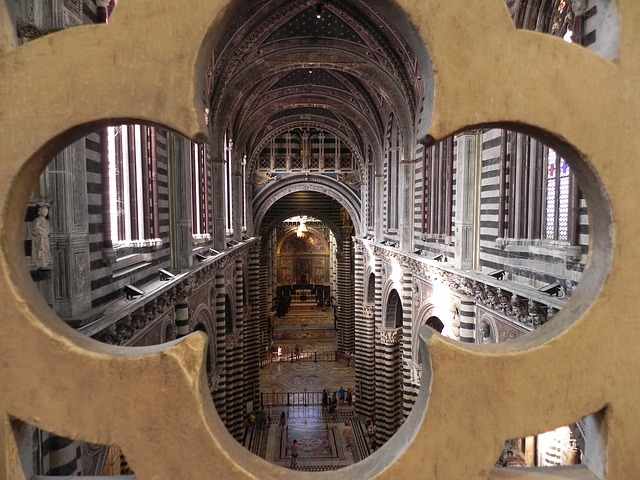
Here you will admire the originals of many works contained in the Cathedral and some of the must-see treasures of Italian art, such as the renowned Maestà by Duccio di Buoninsegna (the largest altarpiece ever painted), the Golden Rose by Bernini, the Madonna and Child by Donatello and the Crucifix by Pisano. The opening time of the Museum and the Cathedral varies during the year. March 1 – November 2: 10.30 am – 7 pm; Cathedral Public holidays and Sundays 1.30 pm – 6 pm; Cathedral prefestive 10.30 am – 6 pm. November 3 – February 28: 10.30 am – 5.30 pm; Cathedral Public holidays and Sundays 1.30 pm – 5.30 pm; Cathedral prefestive 10.30 am – 5.30 pm. December 26 – January 6: 10.30 am – 7 pm; Cathedral Public holidays and Sundays 1.30 pm – 5.30 pm; Cathedral prefestive 10.30 am – 5.30 pm.
Via Fusari and via Banchi di SopraThese streets are the main shopping streets in Siena. Via Fusari hosts a wonderful shop selling handmade ceramics inspired by the Palio’s contrades (they have also a website where you can find some photos of their products). Via Bianchi di Sopra has a variety of boutiques selling typical products, clothes, handmade bags and shoes. Get lost in these streets, discovering small shops rich of tradition and history.
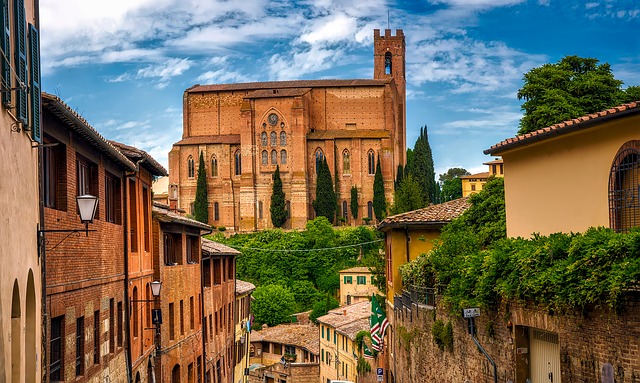
There, you can find an extraordinary collection of works of the Sienese school, placed on several floors in two palaces: Palazzo Brigidi and Palazzo Buonsignori. Without doubt, the Pinacoteca deserves a visit: dozens of rooms filled with pictorial masterpieces will make it an original journey between the fourteenth and seventeenth centuries. Among a multitude of pieces of art, you should recogniza the “Madonna dei Francescani” by Duccio di Buoninsegna, “La Piccola Maestà” by Lorenzetti and the “Madonna and Child” by Simone Martini. Do not miss the third floor, where you can admire the Spannocchi Collection, with paintings of the fifteenth and sixteenth centuries by German, Flemish and Dutch artists. Adult tickets cost 4€, and the Pinacoteca is open on Monday and Sunday from 9 am to 1 pm; Tuesday to Saturday from 8.15 am to 7.15 pm.
Academia dei FisiocriticiFounded on March 17, 1691, the Academia dei Fisiocritici was a place where scientists who sought to give an experimental interpretation of the physical world could meet each other and propose new theories. Subsequently, inside the Academia, the same scientists realized the Museum of Natural History, one of the little wonders of Siena. The Accademia is located in Piazzetta Silvio Gigli 2, and is open Monday to Friday from 9 am to 1 pm. On special occasions, the museum also offers guided tours of zoology, astronomy and medical science. Note: free admissions!
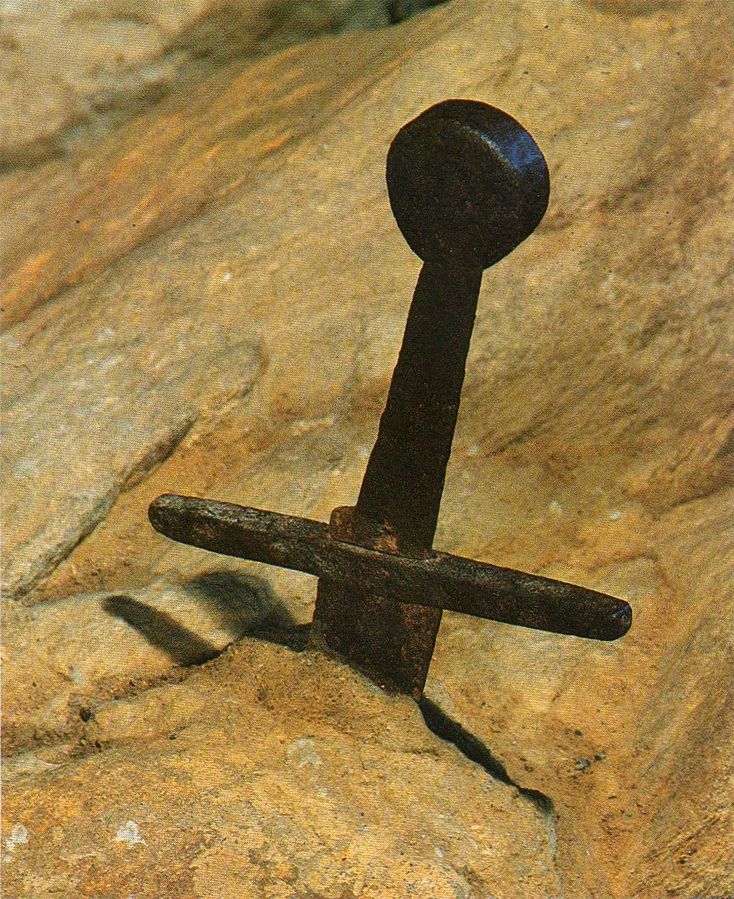
A trip off the door: the Abbazia di San Galgano and the Eremo di MontesiepiA suggestive abbey without the roof and a church with a mysterious sword in a rock in the middle of the Tuscan countryside: do we need to say anything else? Although the abbey, which dates back to the 13th century, is not in very good condition, it is not difficult to imagine how great it was in its Gothic splendour in the past. Now that its golden times have passed, the old abbey offers a very suggestive atmosphere, as you can easily understand from the photo. Admission to the abbey, one of Italy’s most important, is free, and it should be noticed that during the summer it often hosts very nice concerts. To reach the Abbey, drive along the SS73 southwest of Siena: you will shortly arrive at the San Galgano Abbey. The Rotonda or the Eremo of Montesiepi was built immediately after the death of saint Galgano over the ancient hut where he lived the last year of his life. Interestingly, a story has been handed down linking San Galgano, the Eremo di Montesiepi and the Holy Grail. Montesiepi is indeed one of the many places where it is supposed the Holy Graak, the glass used by Jesus at the last dinner, is buried. This theory might be supported by the fact that the shape of Montesiepi’s Roundabout remembers just that of an overturned cup! Inside the Eremo, at the center of the Rotonda, there is the famous sword in the rock: it is the sword of San Galgano, that has been in the rock for over 800 years. Who knows, perhaps in an unreachable room under the Eremo, in the past someone hid the Holy Graal and San Galgano still defends it. The Eremo di Montesiepi is open every day from 9am until sunset with free entrance. Every Sunday morning at 11.30 the Holy Mass takes place.
Food and drink
Smart places for lunchNumerous restaurants, trattorie and osterie in Siena might well catch your eye. The town has a great selection of restaurants and typical local places where you can find top quality dishes and slow food menus. One typical place we recommend is called Toscana Golosa (Via della Sapienza 35). The local is small and a bit out of the way, but trust us, you will be happy when you will have your board of local meats, cheeses and vegetables and your glass of local wine. What is more, the hosts are very welcoming and they really love preparing the best food and wine experience possible. Our suggestion is that you try the tagliere (a board of meats, cheeses and handmade jams) with a glass of Chianti, enjoying the familiar atmosphere and watching the hosts putting together the platters with love and attention. If in couple, one tagliere for 2 will cost24€, while a small bottle of Chianti 9€. Not the cheapest local in Siena, but definitely one of the best experience you can try! If you are looking for a cheap lunch, you should consider the Fiaschetteria Il Pulcino (Via Dei Termini 91). The menu changes every day and in general includes at least 3 typical types of fresh pasta (they are never banal, as tradition and innovation are mixed perfectly) and a couple of main dishes. This small restaurant has an excellent price/quality ratio: ingredients are always fresh and of high quality, and great attention is paid also in choosing suppliers. One dish of pasta costs around 6€, therefore you can have a lunch for less than10€.
When in Rome, do as Romans do! You cannot visit an Italian city without trying its gelato! We recommend La Vecchia Latteria (Via San Pietro 10): lovely, full of taste gelato (according to many, the best in town) and great prices, three flavours for 3.50€! Cash only!
Best dinners in SienaYou cannot leave Italy without eating a truly Italian pizza…and here in Siena we have a wonderful place to taste it! Il cavaliere errante pizzeria (Piazza Provenzano 3). Inside the historical centre, with a unique view on Piazza Provenzano, this pizzeria will amaze you with its wide selection of pizzas, both traditional and original. Their pizzas are famous in Siena for their unquestionable goodness, and the restaurant is also well known for its quick service and courteous staff. One pizza and one drink will cost around 10€. Our tip: if the weather is good, you can eat outside the restaurant, in the wonderful lighted square. If you are looking for something more traditional, then why not try Osteria La Sosta di Violante(Via di Pantaneto 115)? Very good pasta (you should try the pici with capocollo ragù) and delicious main dishes, especially if you love meat (if so, try the chicken, pollo al mattone, or the Fiorentina)! Pasta from 7€, main dishes from 10€. The place is not so big, therefore it is better to book before going!
AccomodationLess than a 15-minute walk from Siena Train Station, you can find the Affittacamere Aura, offering nice brand new rooms with simple furnishing and private bathrooms. The position is ideal: Siena Cathedral is a just 20-minute walk away. Given that it is close to the station, the Affittacamere is perfect if you arrive by train, but we want to mention that the parking is free (the garage is in the building and there is an elevator, therefore it is safe and comfortable). Prices from 50€ per room. Another good solution with free parking is Pescaia, an elegant historic villa with its own garden, just 10 minutes far from the centre of Siena. Free parking and wifi, flat screen TV, private bathrooms and, for the rooms on the ground floor, private entrance. You will love it! Double rooms from 60€. Transportation
Hardly deniable, Ryanair and Easyjet offers very good deals for your holidays. Unfortunately, Siena is not among their destinations, but no panic! The closest destination is Pisa Airport, another wonderful city 2 hours far from Siena. How to get to Siena? The connection between the Airport of Pisa and the Siena is secured by the bus company Tiemme. One way tickets cost 15€, return tickets 28€. More information can be found at its page .
Once in Siena, either you have or do not have a car, it is better to forget about it! The treasures of Siena can only be discovered walking; therefore we recommend you find an accommodation with a free parking if you travel by car. If you want to take a bus, it would be better to buy a ticket in one of the ticket stores of the city (Atrio Stazione Ferroviaria, in Piazzale Rosselli; or Sottopassaggio pedonale della Lizza, in Piazza Gramsci): one ticket (lasting 1 hour) costs 1.30€ (if bought on the bus, 2€), while one-day tickets cost 4.80€.

 Best Italy Trips